Abraham
Abraham is, in Sahaja Yoga, one of the ten incarnations of the Adi Guru. Consequently, he was not only a human being, but an incarnation with a spiritual mission related to the Void Chakra. Through him, the Void Chakra was meant to be further developed for the evolution of humanity. Therefore, Abraham was a superhuman personality whose authority should not be questioned.
The story of Abraham can be read in the Bible, in the First Book of Moses (Genesis), chapters 12 to 25.
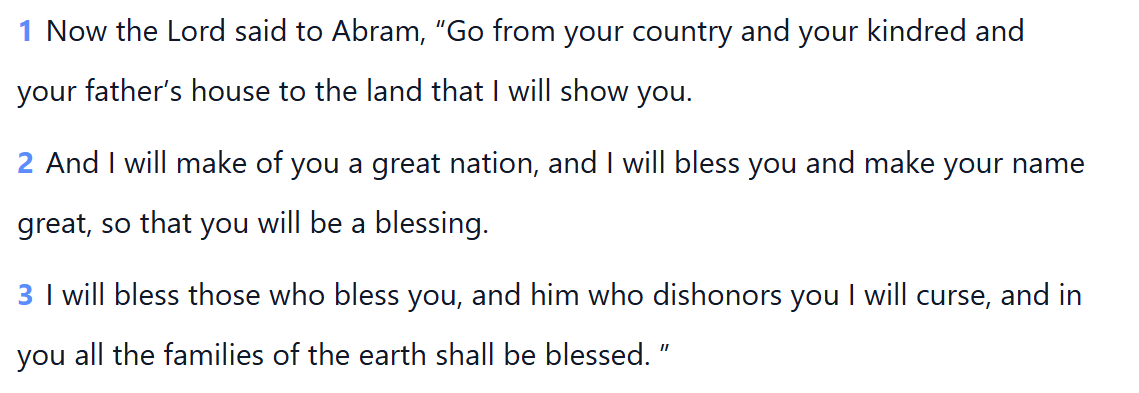
God calls Abraham in Genesis, chapter 12.
In Genesis, chapter 17, God speaks to Abraham:
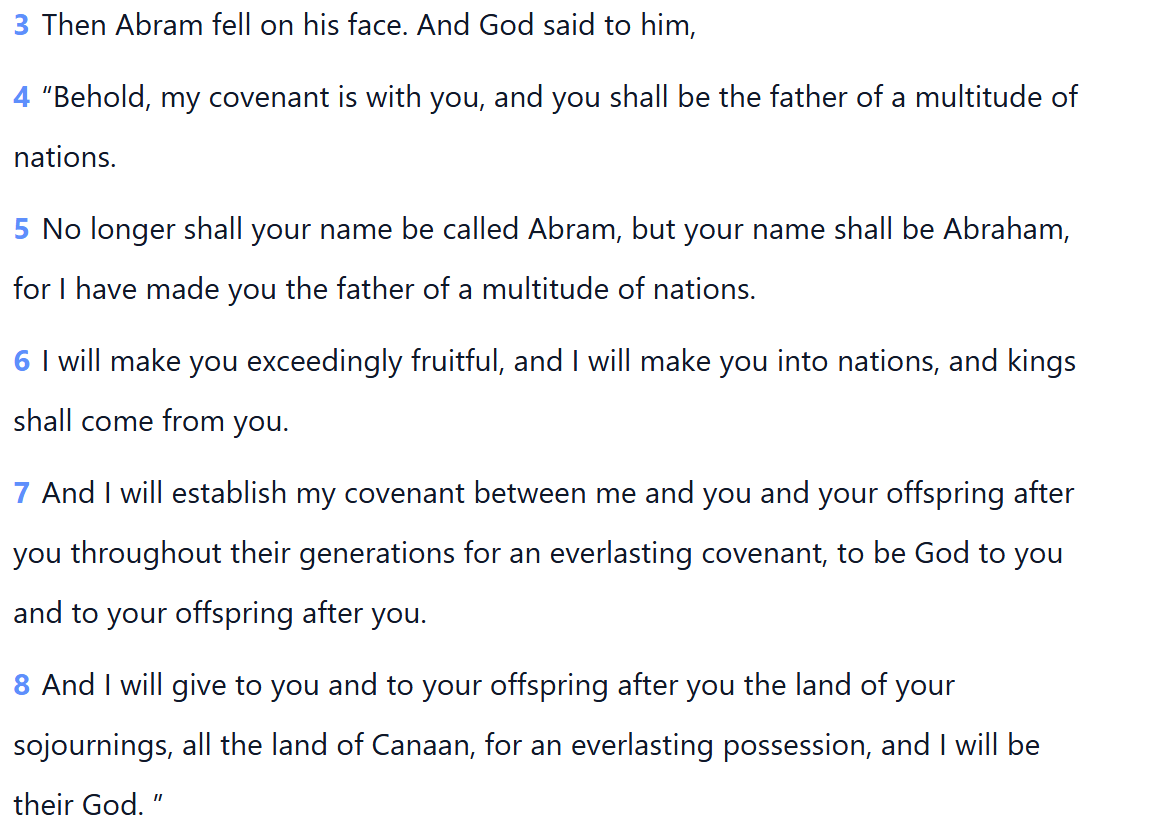
Abraham’s blessing and mission.
-
God makes a covenant with Abraham and blesses him by promising to make a great nation from him. This nation was to be the Jewish people. But other nations also sprang from his seed, among them the Arab people. For Abraham was the father of both Isaac (from whom the Jewish people descend) and Ishmael (from whom the Arab nations descend).
- In Abraham, all families on earth shall be blessed. This is to be understood as meaning that from the Jewish people the Messiah, Jesus Christ, will arise.
- Abraham’s blessing is at the same time his mission. His mission is, so to speak, to be a bearer of blessing and to influence the world through his descendants. In the Jewish-Christian understanding, this blessing is ultimately fulfilled in the Messiah.
- If he is an Adi Guru, then his spiritual task is the development of the Void Chakra. This does not correspond to the mission that God has given him.
Abraham — incarnation or human? Did he have human flaws?
Abraham was chosen by God for a great mission and a great blessing. But this does not mean that he was perfect. He had many weaknesses, which are difficult to reconcile with the idea of an incarnation.
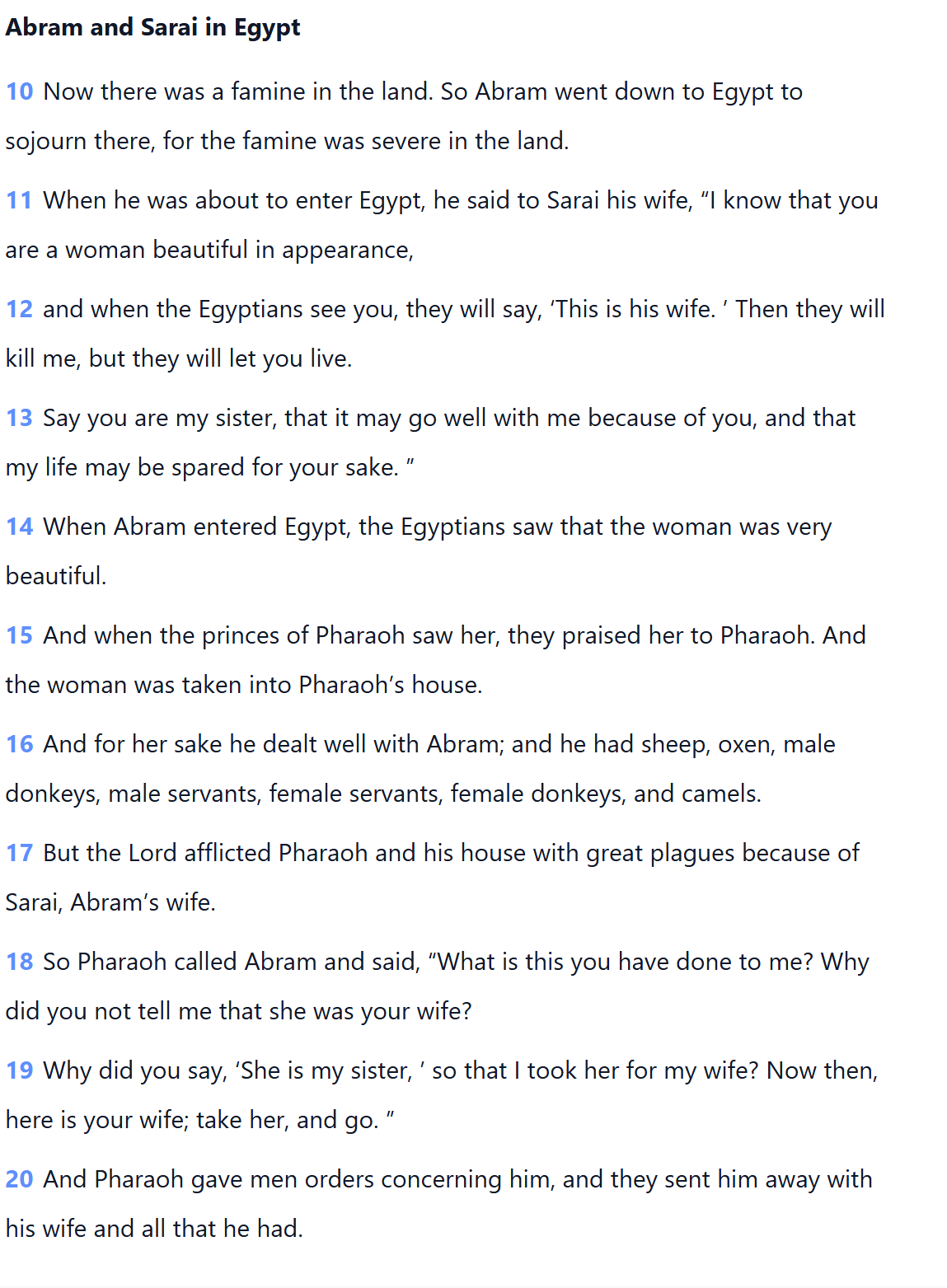
From Genesis, chapter 12:
In Genesis, chapter 20, we read a similar story with the same central theme.
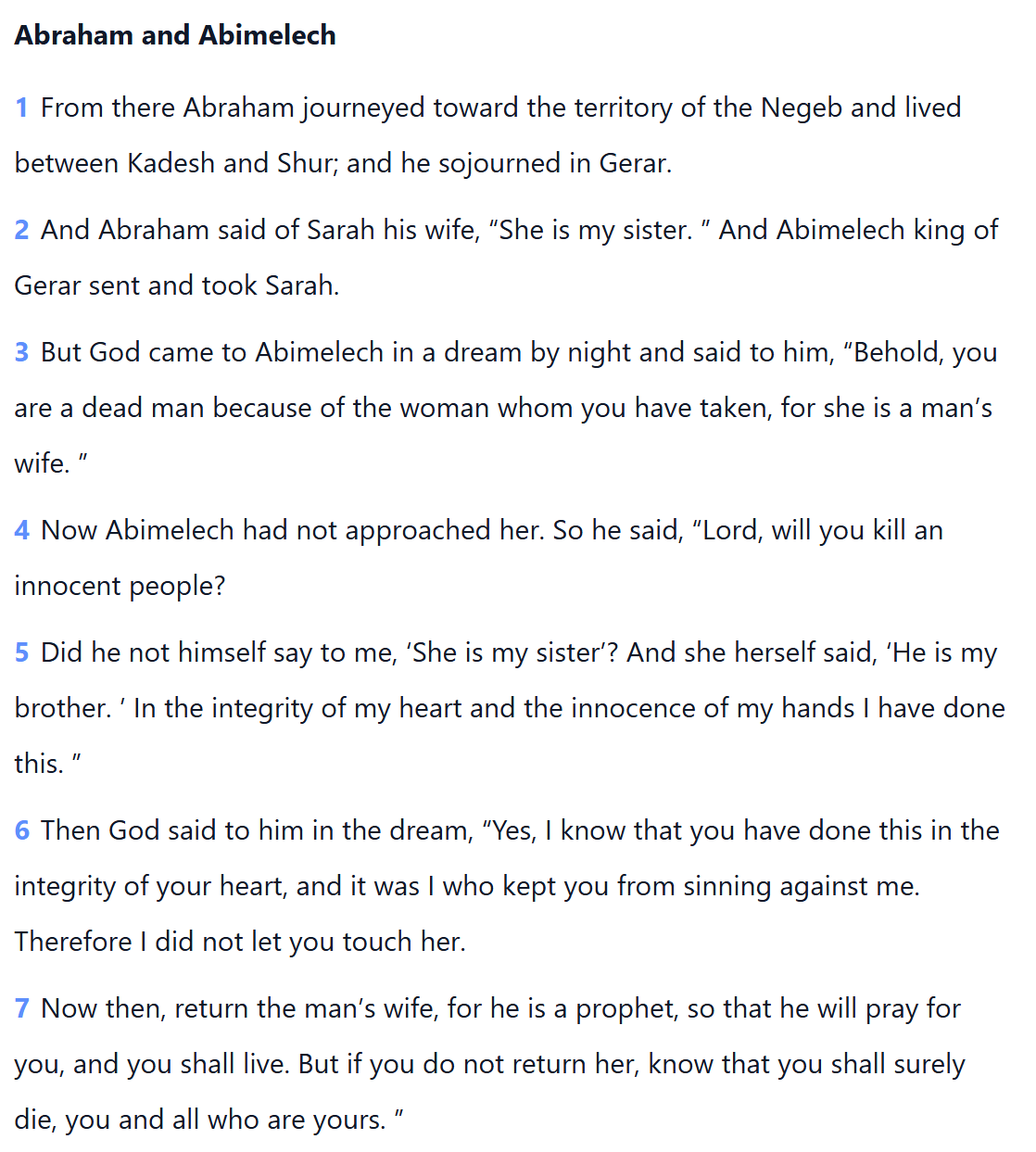
Explanation of these two similar stories
In the first story, Abraham went to Egypt, and in the second story, to the city of Gerar. He was afraid that he would be killed there because of the beauty of his wife, as she was desirable. So Abraham said she was his sister. As his sister, she was "available" to other (powerful) men, for example, the king.
- Abraham’s fear and lack of trust in God are the reasons why he presented his wife as his sister, making her “available.”
- In doing so, he directly endangers God’s promise and blessing. For how could God make a nation from him if his wife is compromised?
- Despite this (human) failure, God helps him and protects his wife from being compromised.
Conclusion
- Abraham was a prophet, yet despite this, he was human and had serious flaws. For giving away his wife—finding such a weak-willed person is not easy.
- Abraham had to go through this situation twice and make the same mistake twice. Presumably, after the second time, he learned more trust in God.
Trust in God is a very difficult matter and far from being self-evident; I do not want to downplay that.
- Like all humans, he had flaws. The biblical story is incompatible with the idea that Abraham was an incarnation of the Adi Guru and a perfect personality. The Bible teaches that all humans have flaws.
Abraham does not trust in God that the promised boy will come
Abraham and his wife Sarah were already very old, and Sarah still had no children; God’s promise seemed not to be fulfilled. Sarah suggested that Abraham have a child with her maid Hagar in her place. Abraham did so, and Hagar bore Ishmael. This was not according to God’s plan. But Ishmael was also blessed and became the ancestor of the Arab people.
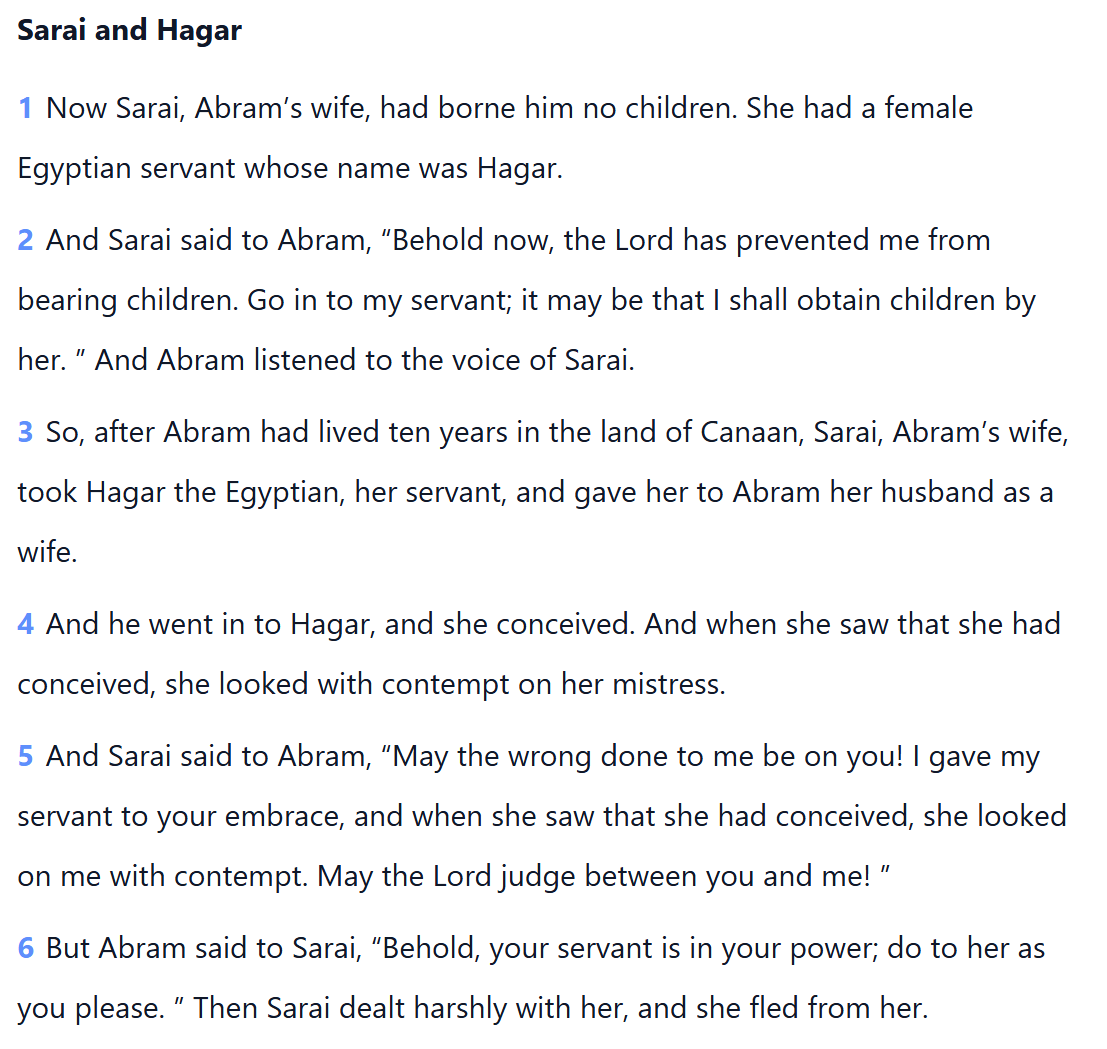
In the story, it is interesting to note that Abraham submits to his wife and allows her to act arbitrarily with Hagar. After all, Hagar is the pregnant mother of his child. This is not a trait of a good leader.
God insists on His promise to Abraham (from Genesis, chapter 17)
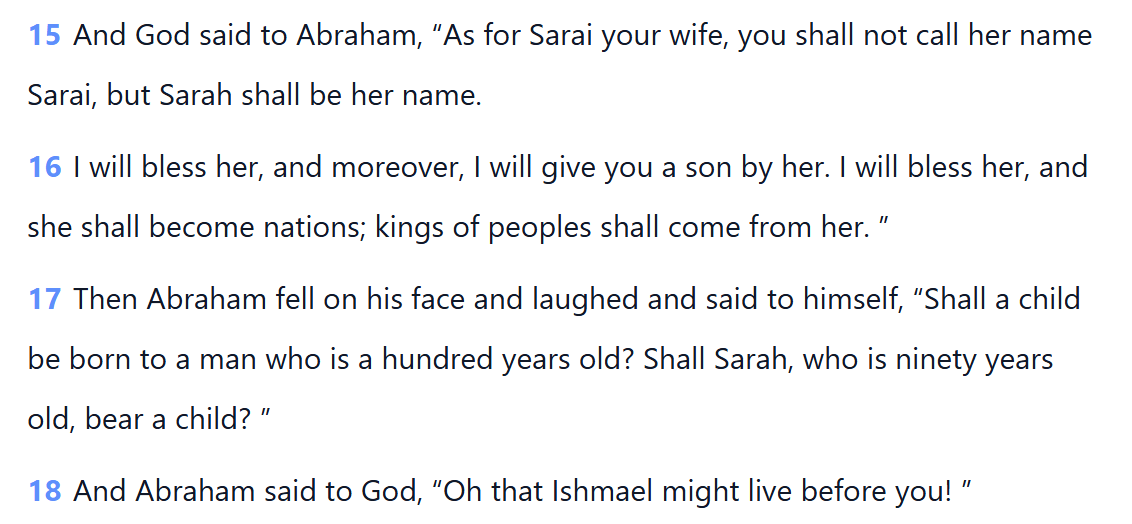
Abraham does not believe God. But this is also understandable, for it is unimaginable. Abraham is already 100 years old and his wife Sarah 90. Sarah had been barren all her life, and now she was to bear a child. That seems impossible. But God fulfills His promise, and the boy is named Isaac. He becomes the ancestor of the Jewish people.
Abraham sacrifices his son and the connection to Jesus
📌 Genesis, chapter 22 (click the black arrow to open)
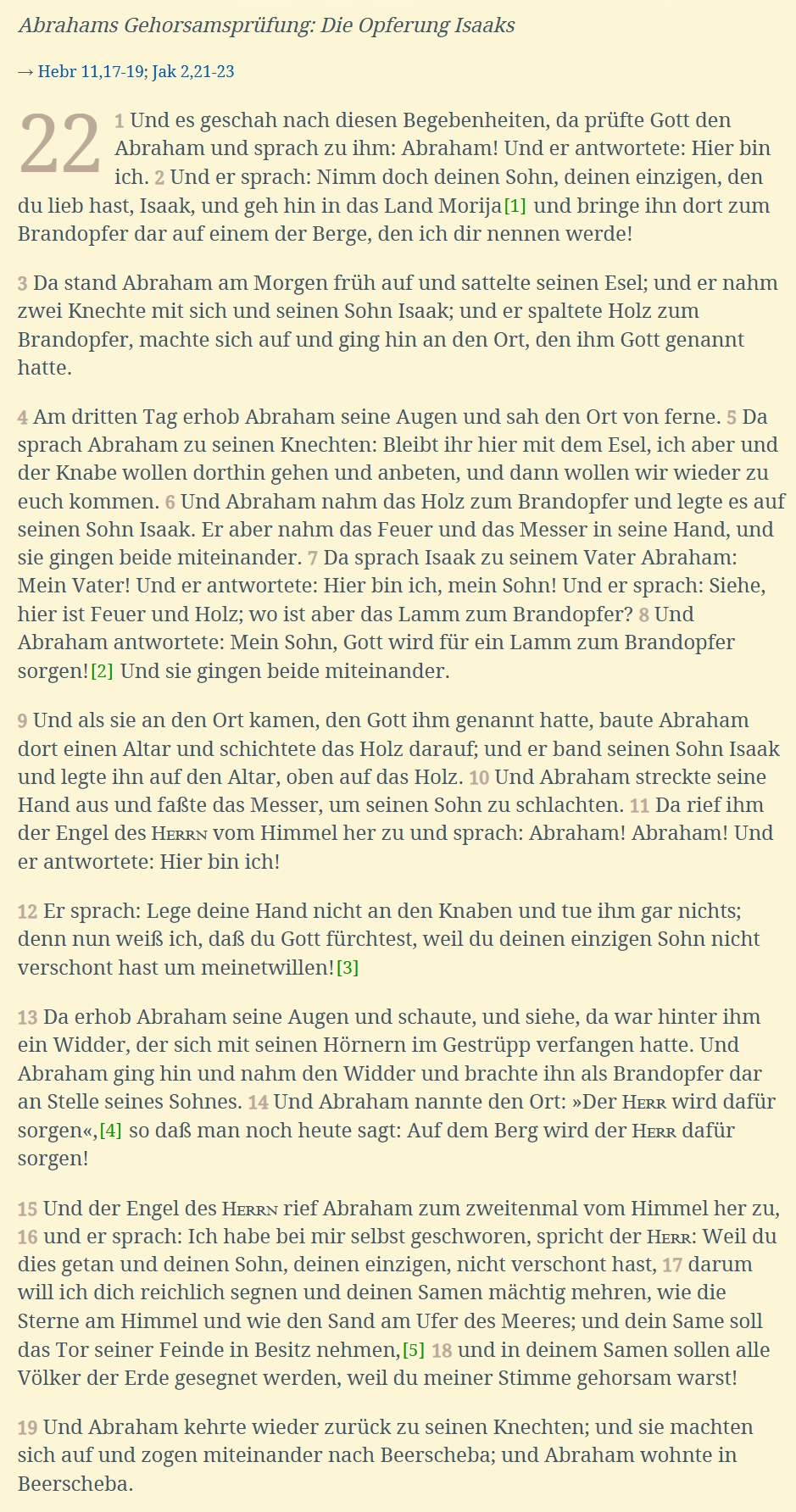
In this well-known story, Abraham was to sacrifice his son Isaac—the promised son—by God’s command.
This was probably the hardest test of all, and Abraham’s obedience showed how much he trusted God.
Indirect prophecy
This story is an indirect prophecy about Jesus Christ (Abraham lived in the second millennium BC).
- Abraham was to sacrifice his son Isaac but was stopped by an angel. God sacrificed His Son for the sins of humanity.
- Isaac had to carry the wood for his own sacrifice. Similarly, Jesus had to carry His cross.
PProphecy in the Bible is evidence of its credibility. It is a kind of signature of God. For He is not bound by time and space, and only He knows what will happen in thousands of years.
There are many more “arrows” in the Old Testament pointing toward Jesus.
Conclusion
- Abraham’s task for this world was to be a bearer of blessing. Nations were to come from him. He faced many personal tests, and all his tests centered on trust in God.
- He experienced great growth in the matter of trust in God. In the beginning, out of fear and lack of trust, he presented his wife as his sister, making her “available.”
- Although God promised him that his descendants would be as numerous as the stars and the sand on the seashore, he remained childless until old age. This was a severe test, for Abraham was a wealthy man, and above all, at that time, being childless was considered a shame.
- Throughout his life, Abraham was allowed to fail and grow greatly in the test of trust in God. He grew so strong in trust that, at God’s command, he was willing to sacrifice the promised and long-awaited son, Isaac. In doing so, he trusted that God had a plan, even though he did not know it.
- Abraham’s task was to be the father of many nations.
If he worked on the Void Chakra, then the theme was trust in God. Perhaps he developed the theme of trust in God in the Void Chakra, and this now has an influence on all of humanity.
- On the other hand, most people have some kind of tests and central themes in their lives. Could one say that all these people are working on the chakras of all humanity?
- The theme of trust in God is a frequent central theme in the Bible.
For example, King Hezekiah in the Bible showed an almost superhuman trust in God, and yet he is not an incarnation.
- According to my conclusion, Abraham was not an absolute role model as one would expect from the incarnation of the Adi Guru (Primal Master). He was very human and had human flaws, and this is probably a good thing.
Guestbook
Guestbook
Comments: